
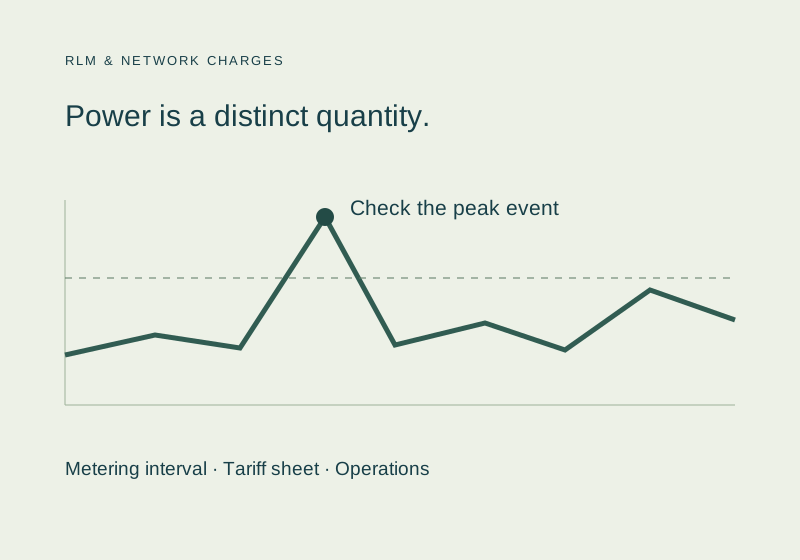
Why a high peak is noticeable despite similar consumption
The business consumes hardly any more electricity over the year, yet network costs rise. One possible cause is that several large systems now run at the same time. At a connection with recorded load measurement (RLM), electricity offtake is usually recorded in quarter-hour intervals. Higher power demand used as the billing basis can then increase costs. Kilowatt-hours describe energy consumed; kilowatts describe power. Looking only at the annual total can hide when many systems draw electricity simultaneously.
For customers whose power demand is metered, the network charge system distinguishes between energy and demand charges. The applicable charges depend, among other things, on the connection’s voltage level and annual equivalent full-load hours. This calculated figure is annual consumption in kWh divided by annual peak demand in kW. It is not the same as opening or production hours. The responsible network operator’s published tariff sheet and the billing period are therefore the basis for any review. The Federal Network Agency explains how network charges are calculated.
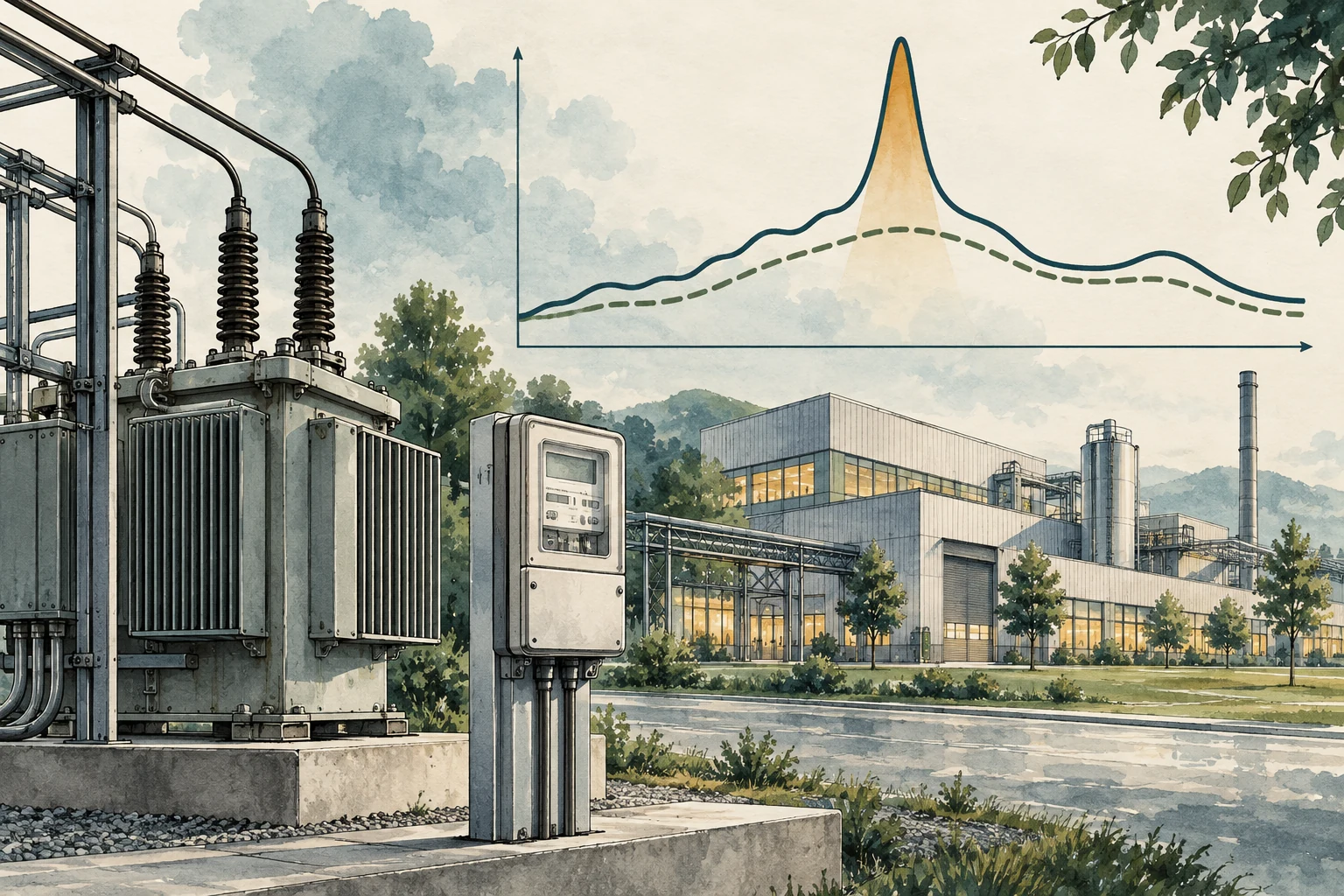
Combining measurement data and invoice
Request the complete load profile for the period under consideration. Note whether the file contains energy quantities per measurement interval or average power values. For example, with quarter-hourly values, 25 kWh within an interval corresponds to an average power of 100 kW. Therefore, to compare this with a power peak on the bill, you need the kW value. A short inrush current of a machine is different from the power averaged over 15 minutes.

Highlight the highest intervals and compare them to shift start times, heating processes, compressed air usage, cooling, or charging infrastructure. Check for data gaps, substitute values, and clock changes. Inquire which measured or agreed-upon power was actually used for the invoice. The highest number in an unverified export file is not sufficient proof.
Making the scale visible
A simplified example, not a network price offer: Assume the relevant annual capacity price is €120/kW and the billed capacity is 200 kW. This amounts to €24,000. With a demonstrably reduced billing capacity of 180 kW, it would be €21,600 under unchanged conditions.
The calculated difference of €2,400 does not automatically represent a saving. Other fee items, a change in the usage hour category, investments, and operating costs are not taken into account here. Furthermore, avoiding a single load peak is insufficient if an equally high peak occurs elsewhere in the relevant period.
Examine small interventions before making large investments
First, check the shift start time: For example, do the compressor, furnace, and vehicle charging all start simultaneously, even though not all are needed immediately? A coordinated schedule can reduce simultaneous demand. This requires that production, quality, and safety standards are maintained. The crucial factor is whether the schedule can be sustained in daily operations. Therefore, document any exceptions, responsible parties, and necessary safety margins.
A storage system or automatic power limitation requires a specific design. Availability, power output, usable capacity, and control must be tailored to the actual peak event. Simply postponing a peak and generating it again later does not achieve the objective. The article Photovoltaics, Storage and Residual Power complements the analysis of energy flows.
Examine first, then quantify the benefit.
To make a sound decision, summarize four things: the measurement data basis, the applicable price list, the operationally feasible measure, and a complete cost calculation. Special network charge regulations or reliefs must be examined separately based on the actual circumstances. The term RLM (Recorded load measurement) alone does not entitle you to a discount.
The technical article Load Profile in Manufacturing explains the data basis. For unclear invoice items, the Checking the Commercial Electricity Bill guide will help. For a consultation with OPTUM, please have your last annual bill, the corresponding load profile, and any known changes to your equipment ready. This will allow us to clarify any outstanding questions regarding the bill and how future demand will be factored into your electricity procurement.