
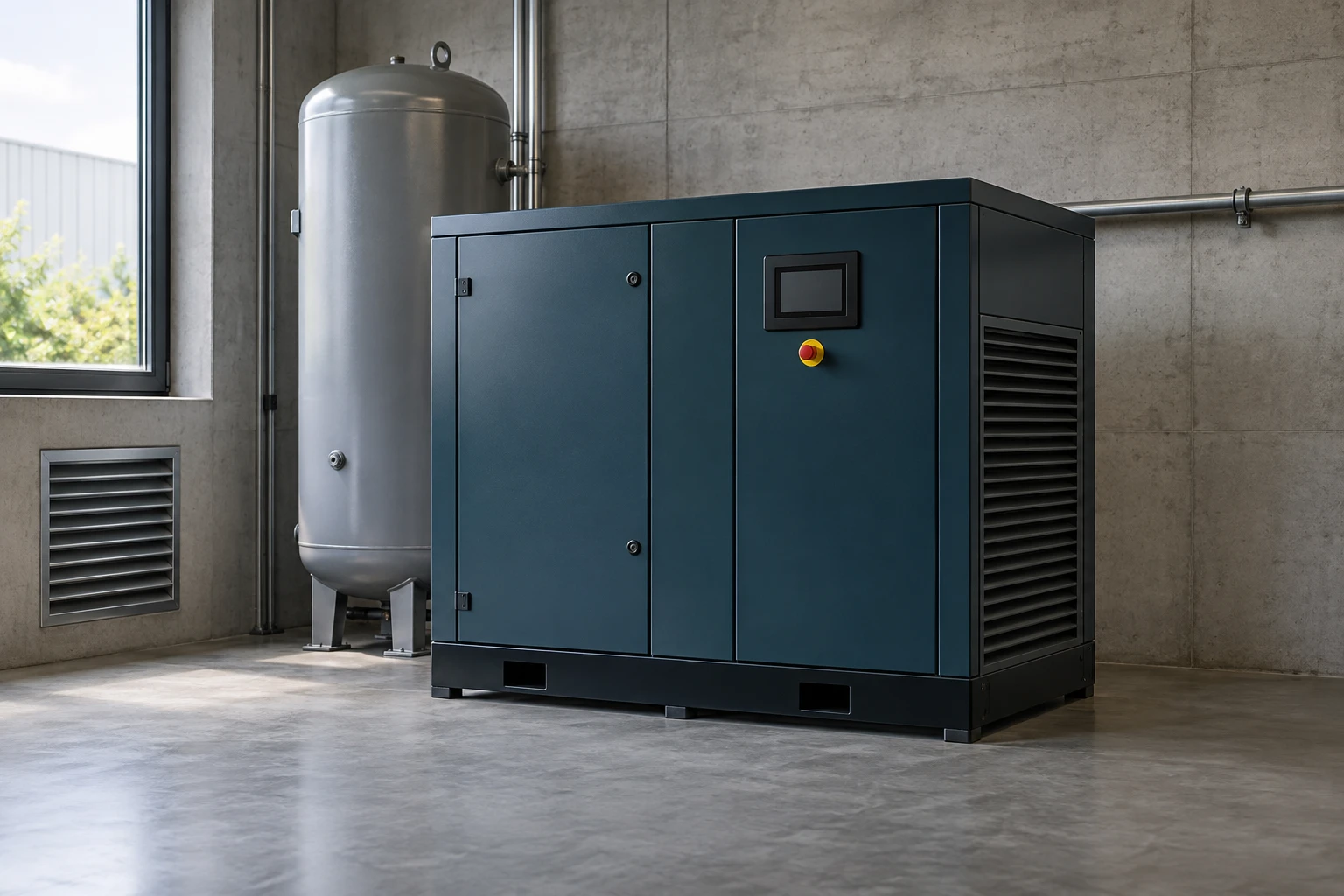
The compressor is only one part of the system
The last employee leaves the hall, yet the compressor keeps starting up. Is this needed for an ongoing process, or is air being lost somewhere? Compressed air supplies tools, machines and production processes. Its electricity demand results from the interaction of generation, treatment, storage, distribution and use. Looking only at the compressor’s connected power rating is therefore not enough for a reliable cost assessment. Actual running times, operating states and the compressed-air demand of the connected equipment are decisive.
Go through the system with the responsible technicians: Which areas are supplied, and who knows their requirements? Record when production takes place and which applications require air even outside of these times. Unexpected operation during a break is a warning sign, but not yet proof of a specific cause of the problem.
Runtime is not the same as electricity consumption
A compressor can consume varying amounts of power under load, idle, or standby. In idle mode, the drive continues to run even though no compressed air is being delivered. Operating hours alone, therefore, do not always allow for an accurate energy calculation. Appropriate electrical measurements and, if available, system data help to differentiate between these states. When documenting a measurement, the measurement point, time period, unit, and operating state should be recorded.

Our electricity cost calculator supports transparent calculation assumptions. Using constant kilowatts and hours remains an approximation if actual power consumption changes. The load profile provides a time-based overview of the whole business; without separate metering, not every change can be clearly attributed to compressed air.
If the system consumes an average of 6 kW in a measured operating state, 500 additional hours result in 3,000 kWh. Assuming a price of €0.25/kWh, this would amount to €750 in consumption-dependent electricity costs. These figures are a calculation example. Whether the runtime can be eliminated depends on the actual compressed air demand; fixed costs and potential capacity charges are not included here.
Compressed air costs per m³: calculate the electricity component
The electricity cost per cubic meter of compressed air is calculated from the measured electricity consumption, the corresponding air volume, and the consumption-dependent electricity price. The formula is: kWh ÷ m³ × €/kWh = €/m³. It is crucial that the values describe the same time period and the same system area.
Example calculation with freely chosen values: In one week, the electricity meter of a compressed air station records 1,200 kWh for compressors and compressed air treatment. At the outlet of this station, 10,000 m³ of air are recorded during the same period. This quantity refers to the pressure and temperature conditions specified in the measurement protocol. We assume a consumption-based electricity price of €0.20/kWh net.
- Specific electricity demand: 1,200 kWh ÷ 10,000 m³ = 0.12 kWh/m³.
- Electricity costs during the measurement period: 1,200 kWh × 0.20 €/kWh = 240 € net.
- Electricity costs per volume of air: 240 € ÷ 10,000 m³ = 0.024 €/m³, i.e. 2.4 ct/m³ net.
This 2.4 cents is a calculated result, not an industry standard. Investment, maintenance, basic and capacity charges are not included. If the electricity meter also records other consumers or if the air meter is located on a different section of the system, the allocation must first be clarified.
For comparison, document measuring points, operating pressure, air quality, and the reference conditions for the volume measurement. A volume at line pressure is not directly comparable to a volume converted to other pressure and temperature conditions. With fluctuating electricity prices, you need the time-specific consumption costs instead of a flat rate.
Is the air volume measurement missing? Then the electricity costs can be determined from the measured kWh and a suitable electricity price, but no reliable cost per m³ can be calculated. Have the volume measurement clarified by a qualified technician; a general conversion based on compressor power is not a substitute.
Define test points with the experts
The Mittelstandsinitiative Energieeffizienz und Klimaschutz cites leaks, pressure levels, pipe routing, maintenance, and demand-based operating times as starting points. These categories help in preparing a technical inspection. Which measure is appropriate depends on the specific system and its applications.
First, determine the minimum pressure actually required by the connected applications. Tools, process quality, and safety have specific requirements. Shutdowns must also be compatible with necessary continuously operating consumers and restart conditions. Therefore, have any changes planned and documented by the responsible technical specialists.
An improvement must be noticeable in comparison.
Before and after comparisons are only meaningful if the operating conditions are known. Lower production can reduce consumption without the plant operating more efficiently. Conversely, higher utilization can increase absolute consumption even if the specific energy demand has improved. A suitable reference value must correspond to the actual process being supplied.
Before implementing any measure, agree on which measurements will be used to assess its impact. The date, any changes in settings, production volume, and unusual downtimes should be included in the evaluation. In addition to energy consumption, costs, investment, maintenance, and operational risks should also be considered when making a decision. A general savings rate does not replace this operational assessment.
Incorporate agreed changes into energy procurement
A documented change may affect your next consumption forecast. Include confirmed effects from their planned start date in the volume assumptions, separately from ideas that have not yet been confirmed. If you also add machinery, consider the combined development of your business. For business electricity procurement, OPTUM discusses which confirmed changes belong in the next volume forecast. Your technical planners remain responsible for designing the compressed-air system.
From test note to procurement basis
- Identify base load and production times in the load profile.
- Compare compressor states and supplied applications with the technical team.
- Have leaks or settings checked by specialists and document the measures.
- Pass the confirmed change in quantity and its start date to purchasing.
Are you preparing a new electricity contract and already have concrete changes in your operations? Discuss procurement with OPTUM – using load profiles, contract data and the planned plant operation as a starting point.